At some point after a Webflow launch, every marketing team asks the same question: do we need ongoing support for this? The site is live, the team has been trained, and things are mostly working. But something is off - requests are piling up, campaigns need pages that don't exist yet, and nobody is exactly sure who’s responsible for keeping the site moving forward.
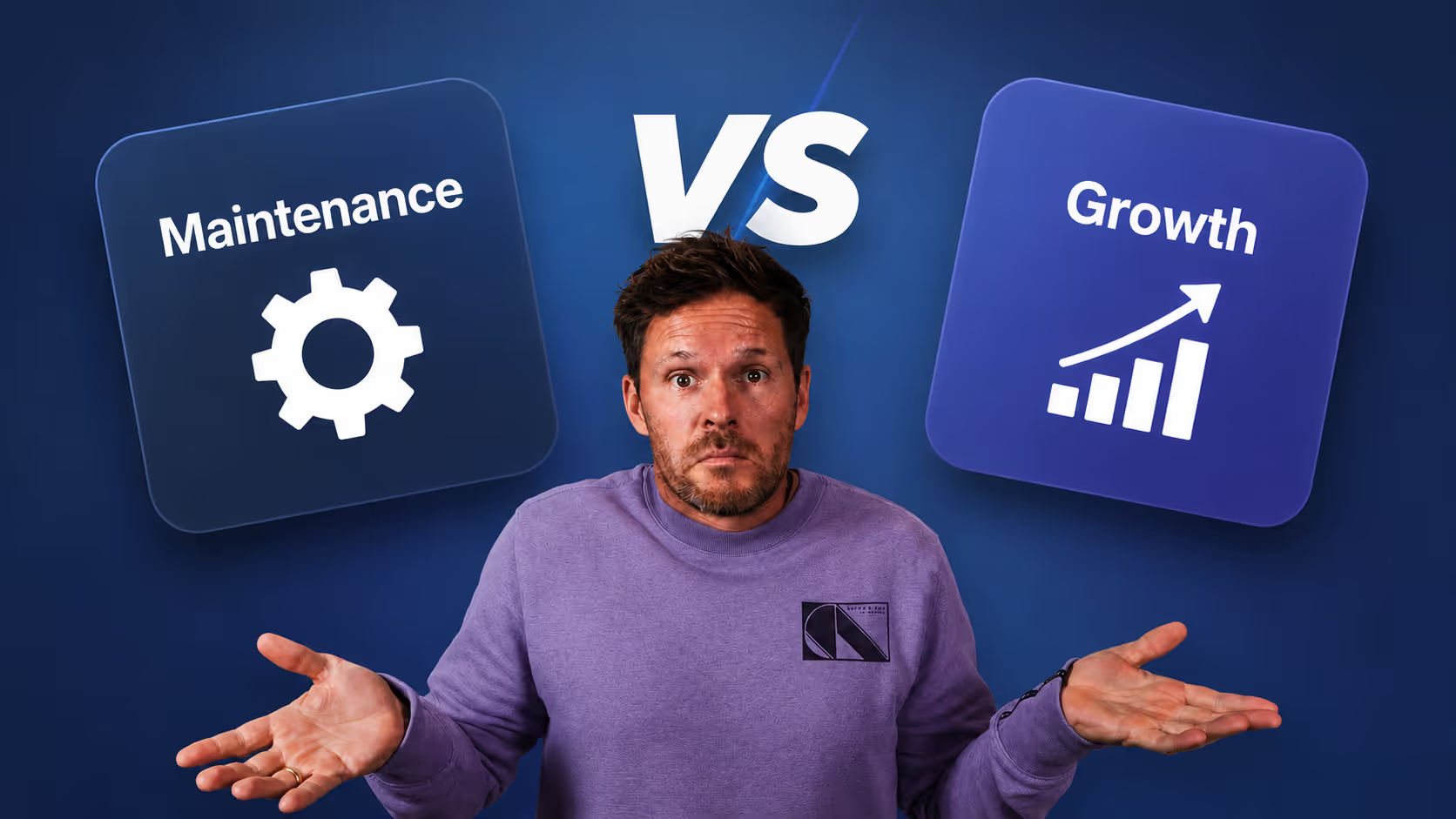
The instinct is usually to look for a maintenance plan. Something that covers the basics, keeps things running, and gives marketing a number to call when something breaks. That instinct is not wrong - but it often points teams toward the wrong solution. Maintenance and a growth retainer are not the same thing, and the difference between them is not just price or scope.
What Webflow Maintenance Actually Means
Webflow maintenance, in the truest sense of the term, is about keeping an existing site healthy. It covers the things that break, drift, or degrade over time without active attention: integration health checks, CMS structure updates, form routing, redirect management, browser compatibility fixes, Core Web Vitals monitoring, and the occasional layout issue that surfaces after a Webflow platform update.
A standard website maintenance plan is reactive by design. Something flags, someone fixes it. The scope is defined by what goes wrong, not by what needs to go right. For some teams and some sites, that is exactly the right model.
It’s the right model when your GTM motion does not depend heavily on the website. When publishing volume is low, the site is structurally stable, and the marketing team's main need is a safety net rather than a growth engine. Smaller teams, earlier-stage companies, or businesses running most of their pipeline through channels that do not touch the website directly can often get by with genuine maintenance support - and they should not pay for more than that.
The ceiling of maintenance, though, is important to understand. A website maintenance package keeps the lights on. It does not generate pipeline. It does not build new pages, test conversion hypotheses, connect new tools to your GTM stack, or make your outbound sequences more effective when prospects click through. It is infrastructure preservation, not infrastructure investment.
What Is a Growth Retainer?
A growth retainer is a different category of engagement. It’s not maintenance with a few extras bolted on. It is an ongoing, active partnership structured around what your website needs to contribute to pipeline next month - and the month after that.
In practice, that means the scope is set proactively each sprint based on your GTM priorities, not reactively based on what broke. New landing pages get built ahead of campaigns, not after they launch. ABM page systems get built and connected to your outbound sequences before the next wave of target accounts hits. A/B tests get designed, run, and iterated on with actual data. Technical SEO compounds quietly in the background, improving organic rankings over time. Integrations get added as your stack evolves.
The operating model is also different. In a genuine growth retainer, you have a dedicated project lead who knows your site, your stack, and your GTM motion - not a ticket queue that rotates through whoever is available. Communication runs through direct Slack access, not a support portal. Strategy calls happen regularly so the retainer stays aligned to where your pipeline targets are moving, not just where they were three months ago.
This is what our Growth Retainer is built around. The monthly scope is defined together at the start of each sprint - new pages, ABM variants, CRO tests, SEO work, integrations - based on what your team is trying to accomplish that quarter. The team brings proactive recommendations to every call, flags issues before they become problems, and treats the website as an active GTM asset rather than a system to keep stable.
Maintenance vs Growth Retainer: The Real Differences
This is what it looks like when you put them side by side:
| Webflow Maintenance | Growth Retainer | |
|---|---|---|
| Purpose | Keep the existing site healthy and stable | Actively grow pipeline through the website |
| Scope | Defined by what breaks or needs patching | Defined by your GTM priorities each sprint |
| Cadence | Reactive - triggered by issues | Proactive - structured monthly sprints |
| Output | Fixes, patches, uptime | New pages, ABM variants, CRO, SEO, integrations |
| Point of contact | Support inbox or ticket system | Dedicated project lead with direct Slack access |
| Strategy involvement | None - execution only | Regular strategy calls, proactive recommendations |
| Right fit | Stable site, low publishing volume, low GTM dependency | Active GTM motion, campaigns, ABM, CRO, organic growth |
Most teams that think they need a maintenance plan are actually sitting somewhere in the middle of this table - and the honest question is which direction they need to move.
The Signals That Tell You Which One You Need
The maintenance vs growth retainer decision is really a GTM maturity question in disguise. Here’s how to read the signals clearly:
You probably need a maintenance plan if:
Your site is structurally stable, your team publishes infrequently, and your pipeline comes primarily through channels that don't rely on the website - direct outbound, referrals, events. If the main risk is something breaking and nobody noticing, a maintenance arrangement solves that problem cleanly and without overspend.
One common challenge for a lot of teams: most marketing teams who've been through a proper Webflow handoff feel confident managing the site independently - and for day-to-day content updates, they are. Where things quietly go wrong is at the edges.
Large uncompressed images uploaded directly to the CMS. A global class accidentally modified while editing one component, changing the styling across 40 pages. CMS structure used in ways that made sense in the moment but slowly turns into something fragile. This is what usually happens when a powerful, flexible platform meets a busy team without a specialist in their corner. A maintenance plan catches this before it compounds.
You probably need a growth retainer if:
Your campaigns are limited by how fast you can get pages live, your ABM motion exists in your outbound sequences but breaks the moment a prospect clicks through to a generic page, you know conversion rates could be better but nobody has the capacity to run proper tests, organic search is a channel you want to build but the content and technical SEO work is not happening, your GTM stack has evolved but the integrations on your site have not kept up.
The honest middle case:
Some teams think they need maintenance but actually need nothing right now - the site is stable, the CMS is clean, and the marketing team can handle everything independently. Others think they need a light maintenance plan but are actually leaving significant pipeline on the table by not investing in active growth work. The right answer depends on what your website is supposed to do for your business in the next quarter, not on what feels administratively tidy.
What This Looks Like at Designbase
Designbase's ongoing engagement is built around a single model: the Growth Retainer. It starts at €2,500 per month with a three-month minimum commitment - enough time to build real momentum on CRO, get an ABM page system live and connected to outbound, and let technical SEO work begin to compound. After the initial three months, it moves to month-to-month with full flexibility. Most clients stay because the output is tied to their pipeline, not because they're locked in.
Each month, scope is defined together based on what the team is trying to accomplish: which campaigns need pages, which accounts need personalized experiences, which conversion elements need testing, which integrations need extending. There's a dedicated project lead on every retainer - one person who knows the site, the stack, and the GTM motion - with direct Slack access and no ticket queue between your team and theirs.
If a team comes to us needing only a few edits per month with no active campaigns, no ABM motion, and no CRO work in the pipeline, the answer in the discovery call will be honest: the Growth Retainer isn't the right fit right now, and we'll point them toward a lighter maintenance solution instead.
The Right Question
The maintenance vs growth retainer decision is not really about support tiers or monthly budgets. It’s about what your website is supposed to do for your business.
Teams that treat their website as a project maintain it minimally and reactively. Teams that treat their website as GTM infrastructure invest in it continuously - because they have learned that the website is where their paid, organic, outbound, and product-led motions converge, and keeping that surface static while their GTM strategy evolves is not a cost saving. It is a compounding liability.
The right question going into any conversation about ongoing Webflow support is not:
“What maintenance do I need?”
It is:
“What does my website need to contribute to pipeline next quarter - and do I have the right model in place to make that happen?”
FAQs
Standard website maintenance packages for Webflow sites typically range from €500 to €2,500 per month depending on scope, covering bug fixes, integration health checks, CMS updates, and basic performance monitoring.
At Designbase, we run one ongoing engagement model, the Growth Retainer, in three tiers. Build starts at €2,500 per month and covers continuous Webflow development. Attract starts at €6,000 per month and adds technical SEO and content production. Convert starts at €9,000 per month and adds A/B testing, CRO, and tool integrations.
If you only need a few reactive fixes per month with no active campaign support, a basic maintenance arrangement is likely the right fit, and we will tell you that honestly in the discovery call.
For most SaaS websites, a maintenance package should cover at minimum: integration and form routing health, redirect and 404 monitoring, Core Web Vitals tracking, CMS structure updates, and browser compatibility fixes. But for B2B SaaS teams with an active GTM motion - running campaigns, outbound sequences, and content programs - reactive maintenance alone is not enough. The most valuable ongoing website support for a SaaS marketing team includes new page builds, conversion optimization, and technical SEO work that compounds month over month. A maintenance plan that only fixes what breaks will not move pipeline.
Yes. A website maintenance agency is set up to respond to problems: something breaks, you raise a ticket, it gets fixed. A Webflow growth partner is set up to drive outcomes: monthly scope is planned around your GTM priorities, new pages are built ahead of campaigns, and conversion and SEO work runs continuously. The operating model is fundamentally different - one is reactive and passive, the other is proactive and pipeline-oriented. For B2B SaaS companies where the website is an active part of the GTM stack, a growth partner delivers compounding value that a standard maintenance service cannot.
Conversion optimization is one of the highest-leverage activities in an ongoing Webflow engagement and it should be treated as a standard part of any growth retainer, not an optional add-on. In practice at Designbase this means building page variants, running structured A/B tests, analyzing which elements are breaking the conversion flow, and iterating based on data rather than gut feel. For B2B SaaS sites, the compounding effect is significant: incremental improvements to demo request rates on high-traffic pages can materially affect pipeline quarter over quarter. CRO is built into every sprint alongside page builds, technical SEO, and ABM work.
Hiring a full-time Webflow developer typically costs €60,000 to €90,000 per year in salary, before recruitment time, onboarding, and the risk of a single person covering both strategy and execution. A monthly retainer gives you a dedicated team - designers, developers, and a strategic project lead - with the full expertise of an agency's build standards and tooling, at a fraction of that cost and with full flexibility after the initial commitment period. For marketing teams at Series A to C, a retainer typically delivers more output, broader expertise, and better alignment to GTM priorities than a single in-house hire. If needs change, you are not managing a redundancy.