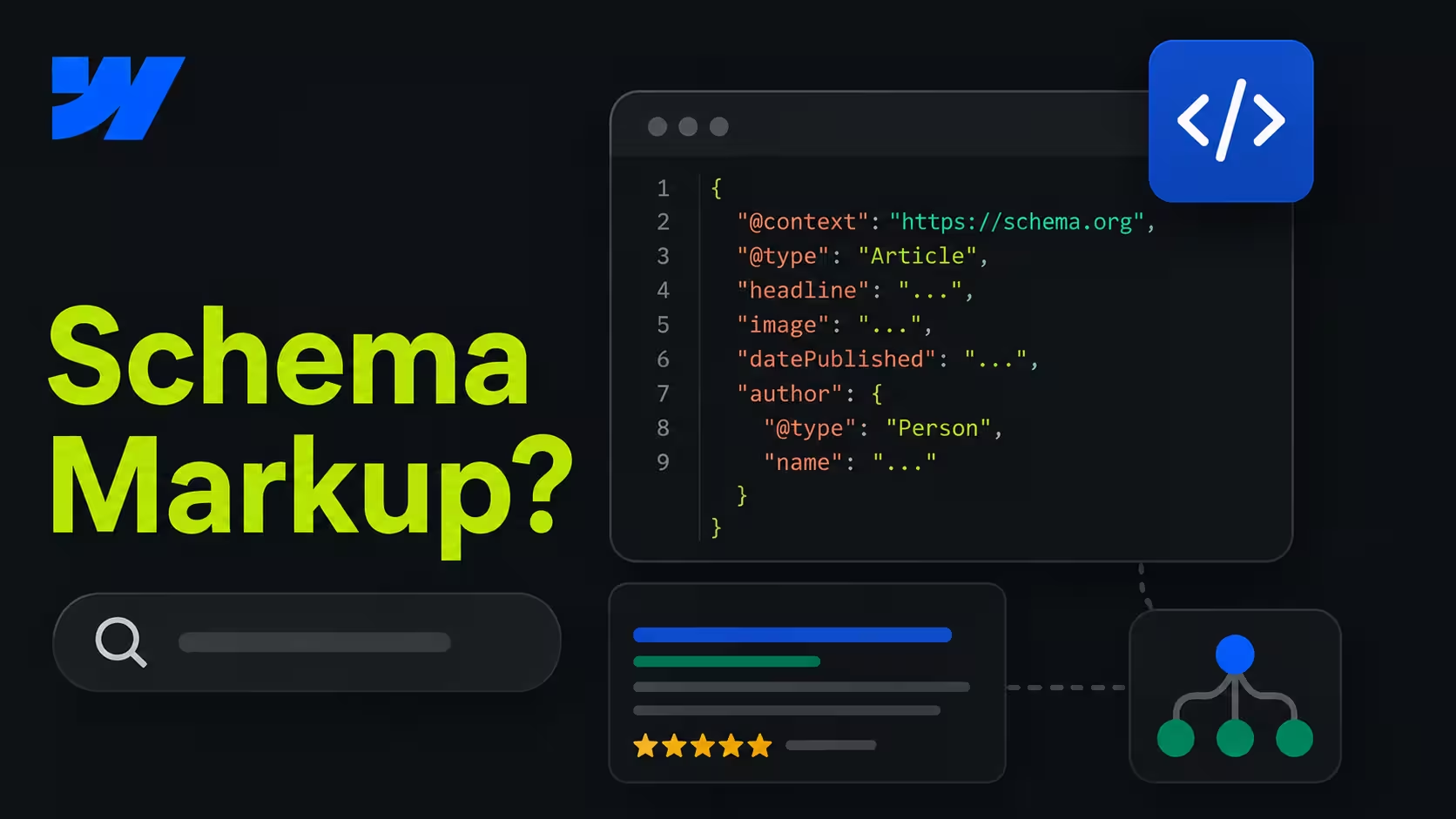
Schema markup can support AI search visibility, but it doesn't directly guarantee that a page will be cited by ChatGPT, Google AI Overviews, or other answer engines. It gives search systems clearer information about what a page contains, who created it, which organization stands behind it, and whether it describes an article, service, product, or question-and-answer section.
That is why both sides of the schema debate contain part of the truth. Schema is not a magic citation switch, and there's no special markup type that guarantees AI citations. But accurate structured data can reduce ambiguity and help systems interpret a page more consistently, especially when it matches the visible content and supports clear authorship, brand, service, or FAQ information.
The practical question is therefore not whether schema markup guarantees citations. It's whether adding or improving it is worth prioritizing on your site. In most cases, schema should come after crawlability, useful content, clear headings, internal linking, and strong page structure - but accurate markup is still worth it when it reinforces information that search engines and AI systems need to understand.
Why Has the Schema Conversation Changed in 2026?
Schema markup has become less about earning visible Google rich results and more about helping search engines and AI systems understand a page. FAQ accordions, review stars, recipe cards, and other SERP enhancements were once the main reason teams implemented structured data, but the focus in 2026 has shifted towards machine readability: helping systems classify, attribute, and extract information from pages with greater confidence.
That shift became even clearer when Google removed FAQ rich results from Search on May 7, 2026. The markup itself was not deprecated, Schema.org did not retire FAQPage, and Google explicitly stated there was no need to proactively remove structured data that was no longer producing a visible rich result. What actually disappeared was the visual search enhancement, not the idea that machine-readable Q&A structure can still be useful for AI systems parsing a page.
This is exactly why schema now has to be discussed differently. The question is no longer revolving around “Will this give me a bigger SERP feature?” - it's “Will this help search engines and answer engines understand who wrote this, who published it, what this page is about, and whether its content can be trusted enough to cite?”
What Does the Positive Schema Data Actually Show?
The strongest evidence doesn't show that every schema type improves AI visibility equally - it points to a small group of markup types that repeatedly help clarify page meaning.
A 2026 analysis focused on AI citation behavior argued that four schema types produce measurable citation impact: FAQPage, Article with author and publisher fields, Organization with a populated sameAs array, and Product or Service schema for commercial pages.
The reason behind this is practical. FAQPage gives machines clean question-answer pairs. Article markup provides authorship and freshness. Organization schema helps with brand explanation. Service or Product schema ties commercial pages to the exact offer being described.
Support for the Article and Organization side is particularly strong: If an article is intended to support E-E-A-T (which it always should), Article schema should include a real Person or Organization author entity, a publisher entity, publication and modification dates, and a canonical relationship between the content and the publishing brand.
Organization schema has also become more important than many teams realize, especially through the sameAs field.
Schema.org’s sameAs property connects an organization to external reference pages that without a doubt identifies the same entity, like its official profiles or knowledge-base entries. This can help search systems resolve brand identity, although there's no independent evidence proving that it directly increases AI citation rates.
Why Do Schema Studies Still Conflict?
Schema markup does not guarantee AI citations because the evidence linking it to citation performance is mostly observational. Pages with schema often appear more frequently in AI citations, but those pages also tend to have better writing, clearer headings, stronger internal links, and more consistent brand signals, making it difficult to separate the effect of the markup from the overall quality of the page.
That means correlation can easily be mistaken for causation. If a page with FAQPage markup also contains direct-answer content, a real byline, updated dates, and strong topical authority, it becomes difficult to isolate how much of the citation behavior came from the markup itself versus the quality of the underlying page.
The more useful interpretation is not that schema guarantees citations. It’s that schema reduces uncertainty. A search engine or LLM can often infer what a page is about without structured data, but inference is probabilistic. Structured data makes the page easier to classify on purpose. That becomes more valuable when you’re trying to connect content to a real brand, a named author, or a service category that must be understood precisely rather than approximately.
Which Schema Types Should You Prioritize?
Most content-led sites can make meaningful progress by prioritizing the schema types that clarify the page's purpose, authorship, organization, service, product, or visible FAQ content.
You don't need fifteen schema types live across the whole site to make progress - use them where they make sense, that's how you'll get the best out of these signals. You need the few that clarify the page's purpose, authorship, brand identity, and commercial offer.
Which Schema Implementation Details Matter Most?
The most important schema implementation details are accurate authorship, consistent publisher and organization information, and a close match between the markup and the content visitors can actually see. Choosing the right schema type matters, but incorrect or outdated implementation can make the markup less useful for search engines and AI systems.
First, Article schema should not just list an author name as a text string. 2026 schema implementation best practices suggest that the author should be a full Person entity with a URL to a substantive bio page, a job title or expertise signal, and sameAs links to verifiable professional profiles. That creates an identity chain from the article to the person to their external footprint.
Second, publisher details should connect back to a canonical Organization entity rather than being redeclared inconsistently on every page. This matters because inconsistent brand signals are one of the easiest ways to weaken structured data without realizing it.
Third, schema has to match the visible content exactly. One of the latest studies on schema alignment reports that pages with properly aligned schema received 40-60% more AI citations than pages with mismatched or missing schema, and it highlights the most common failure modes: schema describing hidden content, stale prices or dates, duplicated markup, or FAQ entries that do not appear on the page.
This is a crucial distinction for Webflow teams. It's easy to add JSON-LD once and never revisit it, even when page content, pricing, dates, author fields, or service descriptions change. But static markup attached to dynamic pages becomes outdated surprisingly fast. Schema is only helpful if it keeps pace with the live content.
What Does FAQPage Schema Still Do After Google's Change?
FAQPage schema no longer creates visible FAQ rich results in Google Search, but it can still help describe visible question-and-answer content to search engines and AI systems. Google removed the FAQ rich-result display on May 7, 2026, but the FAQPage markup itself remains valid, so the change affects how FAQs appear in Google - not whether the underlying structured data can still be used.
That leaves FAQPage in a strange but still useful position. It no longer creates a visible Google enhancement for most websites, but it remains one of the cleanest machine-readable ways to present direct Q&A content.
What we recommend at Designbase: Keep valid FAQ schema in place, especially when the content itself is visible and well structured. In other words, FAQPage shifted from a SERP feature tactic to an answer-engine clarity tactic.
That's especially important for supporting content. An educational article can use FAQ sections to answer objections, define terms, and capture long-tail questions, while also building topical trust that internally supports the commercial service page. This is exactly how a supporting piece should behave: it doesn’t need to sell aggressively on every paragraph, but it should clearly reinforce the implementation value of the service page it points to.
Where Does Schema Fit in a Service-Led SEO Strategy?
Schema fits into a service-led SEO strategy as a supporting layer that helps search engines and AI systems interpret the content already on a page. It cannot compensate for blocked crawlers, weak content, poor site structure, missing author information, slow pages, or a website that search engines cannot efficiently access.
Its real value is helping search engines and AI systems interpret the information already present on a page. Clear schema can identify the organization behind a website, connect an article to its author and publisher, describe a service accurately, and organize questions and answers in a machine-readable format. But this doesn't guarantee rankings, traffic, or citations.
Schema is most useful when it reflects visible, accurate, and up-to-date content. If the markup describes information that users cannot see, contains outdated details, or uses inconsistent author, publisher, or company data, it can create confusion instead of clarity. For that reason, every implementation should be validated against the live page and reviewed whenever the content changes.
The strongest results come from treating schema as one layer of a broader technical SEO system. That system should also include crawlable HTML, clear page structure, descriptive headings, strong internal linking, consistent brand information, accessible navigation, and content that directly answers the questions your audience is asking.
This is why schema should be evaluated within the context of the entire website rather than added as an isolated code snippet.
What Goes Wrong When Schema Is Implemented Incorrectly?
Schema usually goes wrong when it describes content that is hidden, outdated, duplicated, or inconsistent with the visible page. The markup is most likely to become misleading when teams treat it as a one-time code task instead of maintaining it as part of their ongoing SEO process.
The most common problems:
- The markup no longer matches the page because the visible content changed but the JSON-LD did not.
- The site adds FAQPage or Article schema without providing visible answers, author information, organization details, or other content that supports those claims.
- The implementation is inconsistent across the site, so service pages, blog templates, and author profiles use different structures and identify the business in different ways.
- The site treats schema as a one-time task instead of reviewing it whenever content, services, authors, pricing, or page templates change.
- The team prioritizes obscure schema types while overlooking the core markup that clarifies the organization, article, service, product, or visible FAQ content.
- The structured data is technically valid but placed on the wrong page, uses outdated URLs, or describes information that visitors cannot find.
- The markup is never validated after launch, so errors and content mismatches remain unnoticed.
These issues can make schema appear ineffective when the real problem is poor implementation. Google's structured-data guidelines specifically advise site owners to mark up visible, accurate, and up-to-date content, and to place the markup on the page it describes.
The larger lesson is simple: schema is not a substitute for a well-optimized website. It works best when it supports clear content, crawlable pages, consistent brand information, strong site architecture, and an ongoing technical SEO process. When those foundations are in place, structured data can reinforce what the page already communicates instead of trying to compensate for what the site is missing.
FAQs
Not reliably or by itself. Schema markup can help search engines and AI systems understand a page's topic, authorship, organization, service, or product, but it does not guarantee AI citations. Its value is strongest when it accurately reflects visible content and works alongside content quality, entity trust, crawlability, and technical consistency.
For most sites, the highest-priority schema types are FAQPage, Article or BlogPosting, Organization, and Service or Product schema. They help clarify visible questions and answers, authorship, brand identity, and the commercial offer described on the page. Use only the types that accurately match the content users can see.
No. Google removed the visual FAQ rich result from Search on May 7, 2026, but FAQPage remains a valid schema type. There is no need to remove accurate FAQPage markup simply because Google no longer displays the expandable result - keep it when the questions and answers are visible on the page and the markup matches them.
The biggest schema mistake is publishing markup that doesn't match the visible page content. Hidden FAQ entries, outdated dates, mismatched descriptions, incorrect URLs, and inconsistent author or publisher entities can all make structured data less useful and create confusion for search engines and AI systems. Validate the markup against the live page whenever the content changes.
Webflow now includes native schema support in Page Settings, and Webflow AI can generate JSON-LD markup based on a page’s content. However, it doesn’t automatically create and maintain the right schema implementation for every page without human review.